Teamwork is a project management platform focused on client delivery. It houses everything related to client tasks, time, budgets, and budgets and workload visibility in a single app, which is appealing to many users.
But this rich feature set is sometimes a double-edged sword. For example, some essentials like company timesheets, tracking reminders, project budgeting, or time-off management are only available on higher tiers. Some current users call these feature restrictions “arbitrary” and complain about “forcing an upgrade rather than reflecting actual, current usage.”
The product’s UX also suffers because a larger feature set means denser navigation and layered views. And the customer support team can be frustratingly unresponsive when you need to sort things out.
None of this erases Teamwork’s strengths but it does explain why some teams need something else: a cleaner UX, more transparent pricing, stronger reporting at lower tiers, or simply a tool that feels proportionate to their growth stage.
This guide explores 9 Teamwork alternatives you might consider instead, including their features, pricing, team size fit, and ease of adoption.
9 best Teamwork competitors at a glance
| Tool | Core features | Best for | Pricing | Team size fit | Ease of use |
| Toggl | – Integrated time tracking – Views (Kanban / list / timeline) – Capacity planning – Workload and utilization reporting | Individuals, agencies and service teams managing billable work and utilization | Free plan; paid from $9/user/mo | Individuals and small to mid-sized teams & growing agencies | Very intuitive, low cognitive load |
| Trello | – Kanban boards – Rich cards with checklists – Project templates – Power-Ups, no-code automation | Small teams wanting simple visual task management | Free plan; paid from $5/user/mo | Freelancers to small teams | Very easy, fast onboarding |
| Coda | – Doc-based workspaces – Relational tables – Custom dashboards – Automation & AI assistant | Teams that value structure built around shared docs | Free plan; paid from $10/Doc Maker | Small to mid-sized teams | Moderate setup required |
| Basecamp | – Personalized homescreen with to-dos – Team message boards and chat – Scheduled work & events – Custom reporting charts | Teams shipping work without running client P&Ls | Free plan; Paid from ~$15/user/mo | Small to mid-sized teams | Very easy, low implementation tax |
| Smartsheet | – Spreadsheet-based grid – Gantt chart with dependencies – Cross-sheet reporting, – Project Control Center | Teams managing structured, data-heavy project portfolios | Paid from ~$9/user/mo; no free plan | Mid-sized to enterprise | Moderate; familiar to Excel pros |
| Asana | – Multi-view project spaces – Portfolios and team goals – Workload management – Automation | Cross-functional teams managing structured internal initiatives | Free plan; paid from $10.99/user/mo | Mid-sized to enterprise | Moderate; requires structure |
| ClickUp | – Hierarchical task structure – Multiple project views – Built-in chat & inbox – Time tracking & timesheets | Teams wanting an all-in-one customizable workspace | Free plan; paid from $7/user/mo | Small to enterprise | Steeper learning curve |
| Wrike | – Custom workflows – Dynamic request forms – Proofing / approvals workflows – Robust reporting | Large organizations standardizing intake and cross-team work | Free plan; paid from $10/user/mo | Mid-sized to enterprise | Moderate to complex |
| monday work management | – Visual boards as a core view – Collaboration tools – Resource and workload widgets – Customizable dashboards | Cross-functional enterprise teams prioritizing visual coordination | Free plan (2 seats); paid from $12/seat/mo | Small to enterprise (pricing favors larger teams) | Moderate; requires structure |
9 best Teamwork alternatives for freelancers, agencies, and enterprise teams
1. Toggl
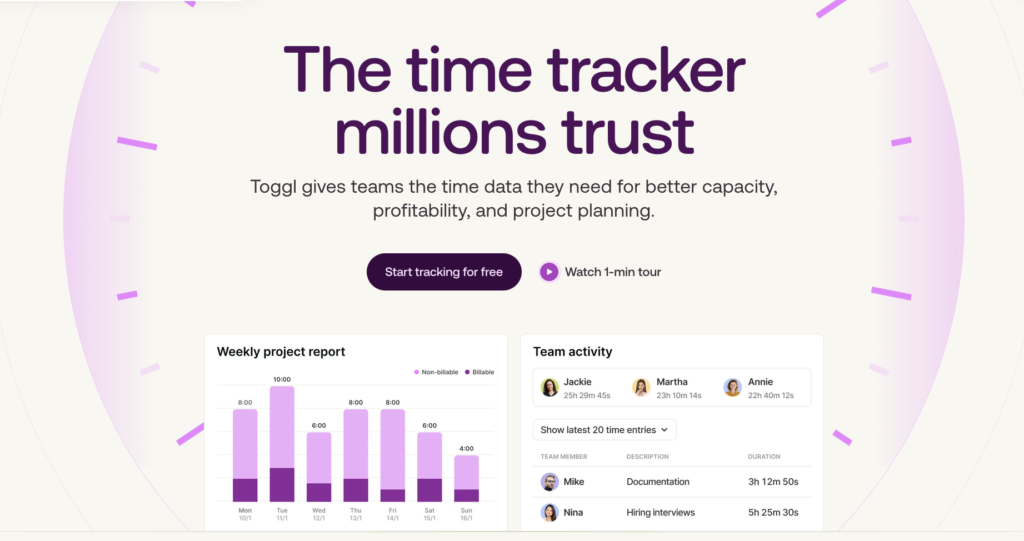
Toggl is a time-centric project management app for teams that need realistic capacity management and project planning. Compared to Teamwork, Toggl offers similar core features, such as time tracking, multiple project management views, capacity planning, and reporting, all without the confusing UX or opaque pricing.
Simple and effective task management experience
Toggl gives you four ways to organize tasks: My Time, Tasks, Board, and Timeline (a premium view).
Tasks list all to-dos, Board is your Kanban view, and Timeline is a simplified Gantt chart. My Time displays your workload, alongside synced calendar events as scheduled or logged time blocks.
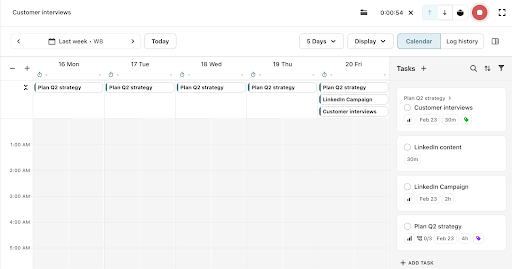
Each task carries structured metadata such as attachments, assignees, priorities, execution period, time estimates, and logged hours. No matter which view you’re using, there’s always a clear indication of how much work you have on your platter at any given time. To further zoom in or out, you can use Filters to view your personal tasks or track projects by status, priority, or client.
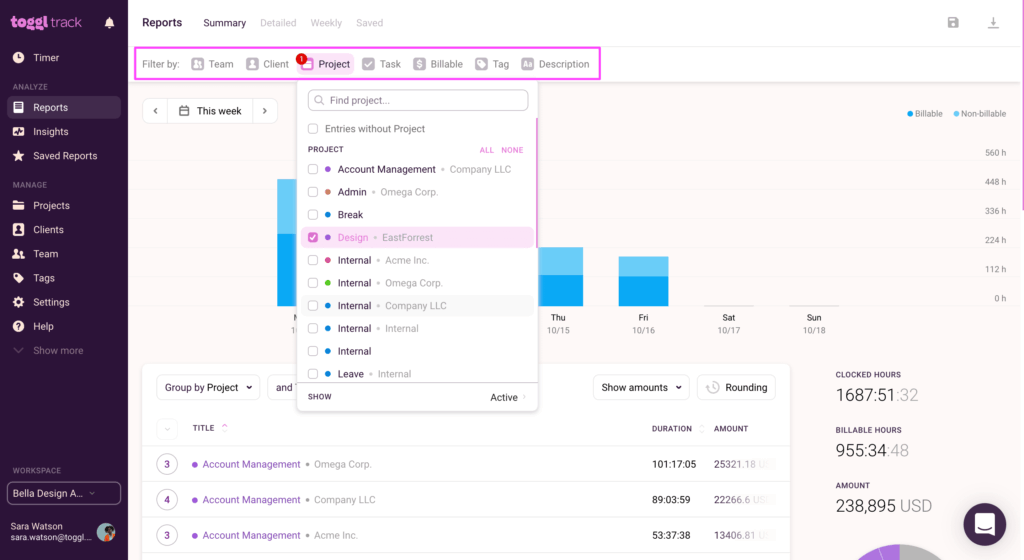
In contrast, Teamwork’s evolution into a broader suite introduces layers that not every team needs. Of course, built-in chat and additional project views can be useful, but they can also blur focus when teams already rely on Slack. Over time, this type of feature sprawl can distract from effective work.
Time tracking as infrastructure, not an afterthought
Where Toggl really distinguishes itself is in how tightly time tracking is woven into each workflow. You can log billable hours manually or start timers directly from planned tasks across views. Task estimates vs logged time are immediately visible, so you know when scoping or pricing conversations need to happen.
Teamwork offers time tracking, too. Yet, some basic features like multi-currency billable rates and time tracking reminders sit behind higher-tier plans (both are free in Toggl).
This gating is frustrating for agencies that invoice clients in local currencies because they need to do currency conversions and then reconcile data in accounting. Missing reminders lead to messy data alongside capacity planning and profitability analysis inaccuracies.
The Toggl Starter plan includes capacity planning tools and full reporting on workload and utilization rates, which is another feature set Teamwork reserves for its most expensive plans. When distributing work, managers can immediately account for PTO and working hours while viewing individual availability in real time.
Guest access without friction
Toggl offers guest access on its lowest paid tier, letting clients or stakeholders track progress without any extra spending. For agencies, this entirely changes the math around transparency and accountability.
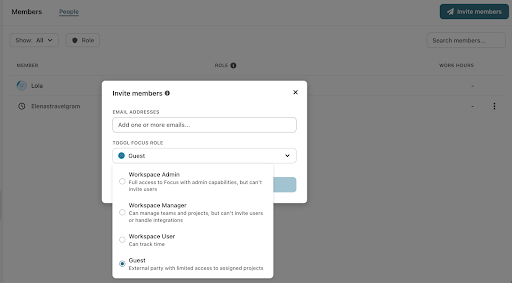
Unfortunately, Teamwork typically reserves broader access controls for higher tiers. This distinction is important because collaboration with external partners is table stakes at this point. When visibility requires an upgrade, you either absorb the cost or restrict access — and honestly, neither option feels great.
If your main qualm with Teamwork is high complexity and equality with a high price tag, Toggl can be an excellent alternative. You get a very similar time tracking and timesheets management experience, alongside drag-and-drop task assignments and richer data for resource allocation, for a fraction of the cost.
Key features
- Manual and real-time timers for time logging, with extras like countdowns, Focus mode, and Pomodoro
- Four different views – calendar, list, board, timelines — to organize and track projects
- Subtasks, multiple assignees per task, and recurring tasks save you time on work breakdown
- Task-, project-, or client-level billable rates with reporting on budget usage
- Workload and utilization reports to better manage available capacity and allocate resources with precision
Supported platforms: Web, Android, iOS, Windows, Mac.
Pros
- Toggl free plan offers access to premium features on Teamwork, like recurring tasks, Google/Outlook calendar sync, and others.
- Intuitive, accurate time tracking experience with multi-currency, customizable billable rates for all team members.
- Instant visibility into logged vs scheduled time and tasks to monitor team capacity and utilization rates.
Cons
- Fewer integrations than other solutions (for now)
- Limited automations compared to enterprise solutions
- No pre-made project templates available for a quick start
Pricing plans
| Forever free plan | Starter | Premium | Enterprise |
| Free up to five users | From $9/user/mo Everything in Free plus: | From $16/user/mo Everything in Starter, plus: | On-demand Everything in Premium, plus: |
| Unlimited projects and tags Manual and automated time trackers Calendar integrations Focus mode Task and board views Timeblocking Task estimates and recurring tasks AI task creator | Timeline view Multiple assignees per task Milestones Guest access Team-level reports, with filters and billable rates Capacity planning tools | Utilization and workload reports | Personalized onboarding and dedicated customer success manager Custom setup, integration, or reporting solutions Multiple workspaces under one organization |
2. Trello
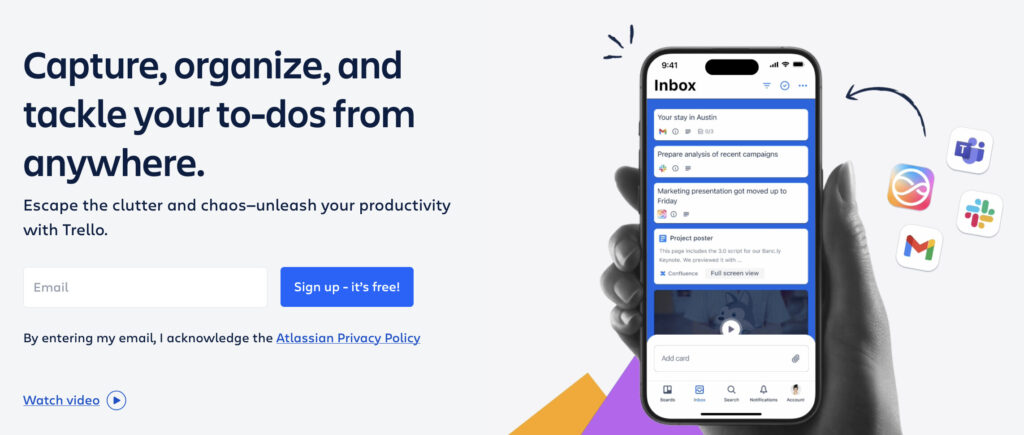
If Teamwork is too complicated for your team, Trello is a simpler alternative.
At its core, Trello is pure Kanban software: boards, cards, and to-dos. You can shuffle the columns and create data-rich task cards to reflect how work flows in your company. That said, Trello doesn’t trap you inside Kanban boards. On the Premium plan, you also get Calendar, Timeline, Table, Dashboard, and Map views. For teams that start visual but later crave reporting or scheduling depth, it’s an easy transition.
Card metadata is richer than many expect. You can carry a surprising amount of project context inside a single card, using labels, checklists, due dates, attachments, custom fields. This reduces tool sprawl, but there’s a caveat: file uploads are capped at 10MB per attachment on the free tier, which is fine for briefs and PDFs, but less okay for raw design assets. Paid plans raise that ceiling to 250MB per file.
Where Trello punches above its weight is its integrations. The software connects easily with Slack, Jira, Miro, and Maker, among others. Most Power-Ups are free, and they extend the board without turning it into a bolt-on mess. You can annotate, exchange docs, or sync issues without duplicating data across apps.
Trello may not satisfy teams looking for layered reporting or complex resource planning. But for smaller teams requiring an instant view of project progress and workload allocation, it can be a suitable Teamwork alternative.
Key features
- Kanban boards to map out and visualize the whole project lifecycle from planning to completion
- Planner with scheduled cards and synchronized events from other apps for personal productivity
- Pre-made templates and customizable workflows to support different types of projects
- Checklists within cards to break down a larger task into actionable subtasks for tighter execution and faster handoffs
- No-code automation and Power-ups to gain additional point features and integrate data from collaboration tools
Supported platforms: Web, Android, iOS, Windows, Mac, Linux
Pros
- Ease of use is a recurring theme in user feedback. Most enjoy that you don’t “have to fight with complicated settings or dig through menus” to get work done.
- Many find labels and color tagging really helpful for prioritizing work and differentiating across tasks.
- A fast and easy setup process is another strong point, according to reviewers. Most teams get up to speed without much guidance.
Cons
- Users report missing advanced features like task dependencies, time tracking, and more advanced reporting.
- No native functionality for project budgeting or client invoicing. Although some options are available via Power-ups.
- Doesn’t warn mobile app users about card description character limits, which can lead to data loss, per users.
Pricing plans
- Free trial available
- Free forever plan for up to 10 collaborators
- 3 paid plans: Standard, Premium, and Enterprise
- Paid pricing starts at $5/user/mo
3. Coda
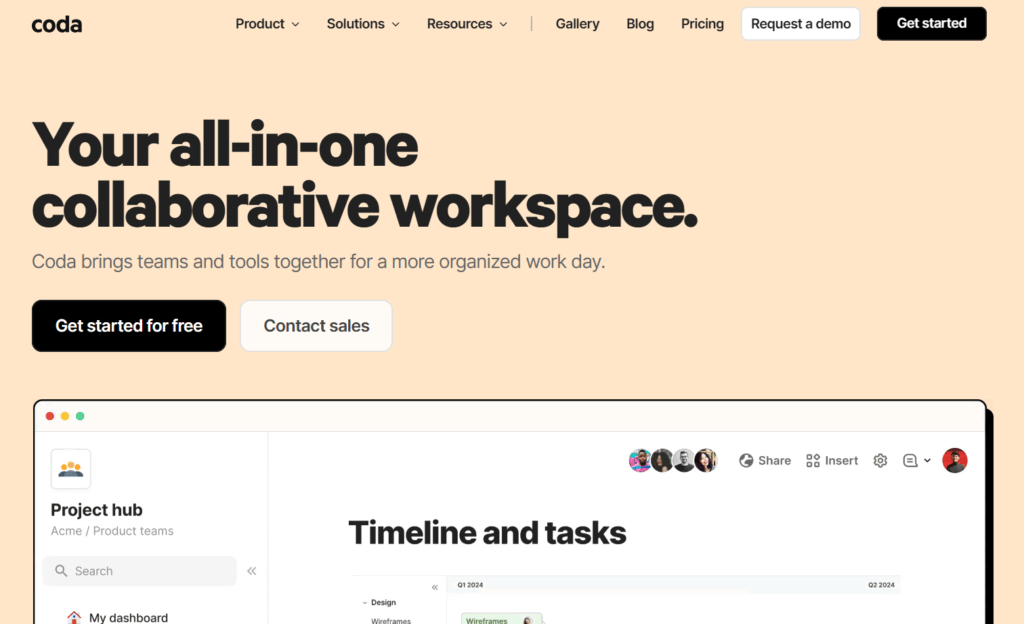
Coda is a work management platform for teams who don’t mind a bit of tinkering to create a setup that mirrors their internal logic.
The entire product experience is based on Docs — a highly configurable editor that feels adjacent to Notion in spirit. You can build knowledge hubs, internal wikis, product backlogs, client reporting portals, and even lightweight CRMs. Shareability is baked in, and the free plan allows unlimited private docs. Attachment limits are generous too: 1GB per doc on the free tier, expanding to 10GB or unlimited on paid plans.
Where Coda stands apart from other project management software is how it treats documents as applications. Inside a single doc, you can layer tables, boards, calendars, Gantt charts, and dashboards. These views interact with the same underlying data model and turn a static document into a living operating system.
The app does a better job with data portability than Teamwork. Your information always stays with the connected apps, and Coda supports straightforward exports of individual docs or entire workspaces. Embedding takes this a step further: external pages can host a live version of your doc, with updates reflected automatically. For teams that publish product roadmaps or client dashboards publicly, that’s a practical advantage.
Sure, Coda demands more upfront setup than a traditional task management app. But for teams willing to put time into configuration, it can be a good way to reduce data sprawl.
Key features
- Central team document hub with seamless file sharing and real-time collaboration features
- Tables that act like databases to track and link structured data
- DIY project dashboards for different reporting needs
- Robust automation rules and custom buttons to handle repetitive work
- An AI assistant for drafting new documents, mining insights, and searching through all stored content
Supported platforms: Web, iOS, Android.
Pros
- Many adopters treat Coda as an all-in-one platform that centralizes project plans, client notes, and performance tracking, reducing the need for other tools.
- Others praise it for being a “choose your own adventure” type of app that you can mold into anything from a mood board to a process manager.
- Product accessibility is another strong point, with users saying it’s “kind to less technical people but robust for more technical people.”
Cons
- Setting proper access and editing permissions can be cumbersome and confusing, according to some teams.
- Very browser-centric. No dedicated desktop app, unless you use an emulator. Mobile app users complain that the features are very limited and the UX is meh.
- Can have performance issues when uploading larger documents or high-resolution images.
Pricing plans
- Free trial available
- Forever free plan with some usage caps
- 3 paid plans: Pro, Team, and Enterprise
- Paid pricing starts at $10 per Doc Maker
4. Basecamp
If you’re primarily using Teamwork as an internal project management solution, Basecamp may be an interesting alternative.
The self-proclaimed tool for the “underdog teams” organizes work around a familiar set of building blocks: to-do lists, card tables that feel Kanban-like, event schedules, message boards, group chat, and email forwards that pull outside conversations into the system. You also get activity feeds and direct data embeds from popular business tools like Figma, Google Drive, GitHub, and others.
Basecamp squarely emphasizes async collaboration. Scheduled check-ins, built-in commenting, and streamlined document sharing make it easy to keep conversations attached to the work and visible to everyone without constant facetime.
Basecamp offers a great way to visualize progress. Lineup chart offers a rolling timeline of what was just worked on and what’s in play. Mission Control and Hill Charts give a quick read on project health without demanding a deep dive into reports. For a PM or ops lead trying to drive consistent execution through alignment, that’s some handy data.
But unlike Teamwork, Basecamp wasn’t built to protect profit margins. Time tracking exists, but it’s a paid add-on. There aren’t any native invoicing, capacity, or workload planning features. Teams that need utilization targets or multi-currency billing baked into daily workflows may feel the ceiling quickly.
In practice, Basecamp suits small teams that value predictability and centralized communication over granular financial control. When your primary job is to keep everyone aligned and shipping work, Basecamp is a good choice. But if you’re managing margin and resource allocation at scale, it lacks Teamwork’s depth.
Key features
- Task lists with assignments, due dates, and progress tracking
- Simplified Kanban-style boards for quick visual task management
- Built-in calendar for events, deadlines, and milestones, with optional external sync
- Built-in document and file management system
- Public message boards and private chats to share updates
Supported platforms: Web, Android, iOS, Windows, Mac.
Pros
- Very low “implementation tax”. New users get up to speed fast on the product mechanics.
- Centralized view of key custom KPIs on the homepage helps managers keep tabs on important metrics without digging through spreadsheets or dashboard filters.
- Good platform scalability. Bigger teams love how Basecamp keeps everyone super organized without being too complicated, even as the headcount grows.
Cons
- Doesn’t offer an “ops layer”. Current users wish there were a way to invoice directly from projects or allocate resources/materials.
- Notifications can get noisy, according to users, unless you strip them down slightly from default configurations.
- No native way to do resource or budget forecasting, which is frustrating for some teams.
Pricing plans
- Free trial available
- Free plan for one project and 20 users
- Two paid plans: Plus and Pro Unlimited
- Paid pricing starts at $15/user/mo
5. Smartsheet
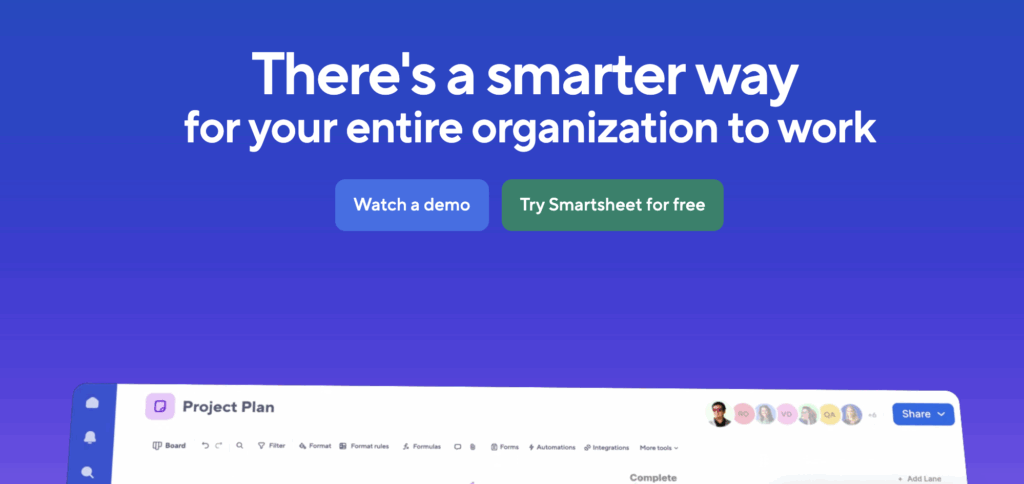
As the name hints, Smartsheet offers a spreadsheet-based work management experience. The Excel-like grid is the primary view, and every other — Gantt, board, timeline, or calendar — sits on top of that same underlying sheet data. Compared with Teamwork, which emphasizes projects and client delivery workflows, Smartsheet feels closer to an operational data platform.
The extra views include some handy extra functionality. Gantt includes dependency management, critical path visibility, and percentage completion of assigned tasks. The Calendar view enables visual schedule management and time-blocking, similar to Toggl.
Smartsheet also boasts excellent reporting features. Reports can consolidate live data across thousands of sheets and remain bi-directional, so updates made in a report flow back to the source. Row reports and sheet summary reports allow aggregation without manual exports. DataMesh, offered as a premium module, supports automatic data updates without using formulas, giving you a centralized system of record that scales horizontally.
Dashboards pull real-time data from sheets and reports and can be shared broadly, including with external stakeholders. For organizations requiring portfolio-level visibility across departments, that’s very handy. Control Center adds another layer of administration, standardizing project creation, approvals, and portfolio reporting from a central view. The combination appeals to enterprises managing repeatable processes at scale.
Smartsheet lacks a couple of Teamwork features like invoicing, user rates, or profitability logic inside the core platform. Those capabilities require integrations.
Key features
- Spreadsheet-style grid view that serves as the foundation for work and data
- Interactive project views, including Gantt charts, calendar, card/Kanban, and timeline for visual planning
- Advanced custom formulas and automation to run data analysis and streamline manual work
- Dashboards and real-time visualization for high-level insight into KPIs and project health
- 175+ native integrations with popular business tools, plus a data connector ecosystem
- Enterprise-grade security and governance with role-based access and compliance support
Supported platforms: Web, Windows, macOS, Android, iOS
Pros
- The balance of flexibility to “build trackers, schedules, dashboards” and structure to “manage tasks, dependencies, ownership” appeals to adopters.
- Others appreciate a convenient data hierarchy inside the sheets, which allows pulling important data into a sidebar.
- The tool also gets brownie points for “effective support of structured project frameworks” and “automation of repetitive tasks”.
Cons
- The platform recently removed its free plan, so there’s no longer a way to test the tool well before committing.
- Some users miss having protection against overwriting others’ inputs when they collaborate on the same sheet.
- Others find the available visualization options limited compared to other tools.
Pricing plans
- No free plan
- Free trial available
- Four paid plans: Pro, Business, Enterprise, and Advanced Work Management
- Paid pricing starts at $9/user/mo
6. Asana
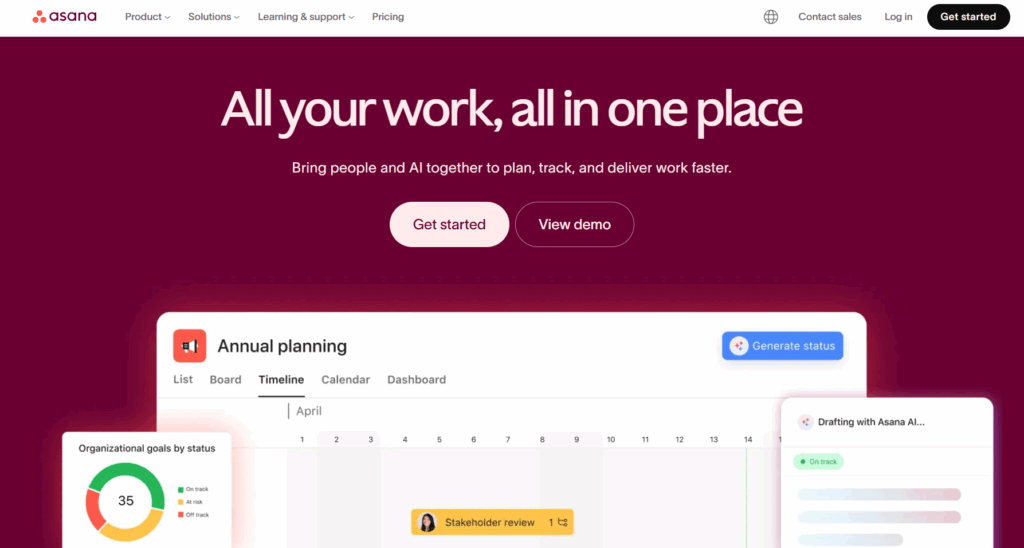
Asana is a work orchestration platform focused on internal alignment, rather than client profitability. It connects daily task execution to project portfolios and wide company goals, plus relies on automation to streamline collaboration.
Similar to Teamwork, this project management platform comes with multi-view flexibility. YOu can display work in a list, board, calendar, timeline, or Gantt format, alongside goals, notes, and portfolios. Portfolios, in particular, monitor stacked initiatives from a single dashboard. You can also track budget indicators, incomplete tasks, and employee workloads, then push structured status updates automatically through the built-in update builder to reduce unnecessary chat pings.
Speaking of team collaboration, Asana offers a more restrained yet effective experience. Instead of embedding a full chat layer inside the product as Teamwork does, it keeps communication anchored to tasks and surfaces updates through a centralized inbox. Many users find this cleaner. There are fewer moving parts, less context switching, and fewer mobile glitches (which are a major frustration for Teamwork Chat app users).
Time tracking is available on certain paid Asana plans and works in two modes: automatic tracking with a timer or manual logging. Subtask time rolls up into parent tasks, giving managers a consolidated view of estimated versus actual hours across project sections. Custom billable rates, however, require a separate Timesheets and Budgets add-on, unlike Toggl and Teamwork.
Overall, Asana tends to resonate with cross-functional teams managing layered initiatives. It keeps attention on work orchestration and team alignment rather than optimizing client-facing revenue mechanics.
Key features
- Robust task management features with owners, due dates, and progress tracking
- Customizable project views like list, board, timeline, calendar, or Gantt chart
- Portfolios to get a consolidated view of progress and performance across teams and initiatives
- Excellent suite of reporting tools and views, based on custom fields
- Strong security controls with cross-regional data backups
Supported platforms: Web, Windows, macOS, Android, iOS
Pros
- Workflow automation is a strong draw for larger teams, who prefer not to waste time on mundane upkeep.
- Portfolio management capabilities and a lack of guest limits are much appreciated by managers in charge of multiple teams and initiatives.
- Users also really like the in-platform mentions and comments as a way for linking tasks and sharing status updates.
Cons
- Timesheets and budget tracking are gate-kept as a paid add-on outside of the standard premium plans.
- The tool requires clear conventions for project setup, so that it doesn’t become too cluttered and confusing.
- Notification volume and frequency can become overwhelming unless you personalize the settings.
Pricing plans
- Free trial available
- Free personal plan for up to two users
- 4 paid plans: Starter, Advanced, Enterprise, and Enterprise +
- Paid pricing starts at $10.99/user/mo
7. ClickUp
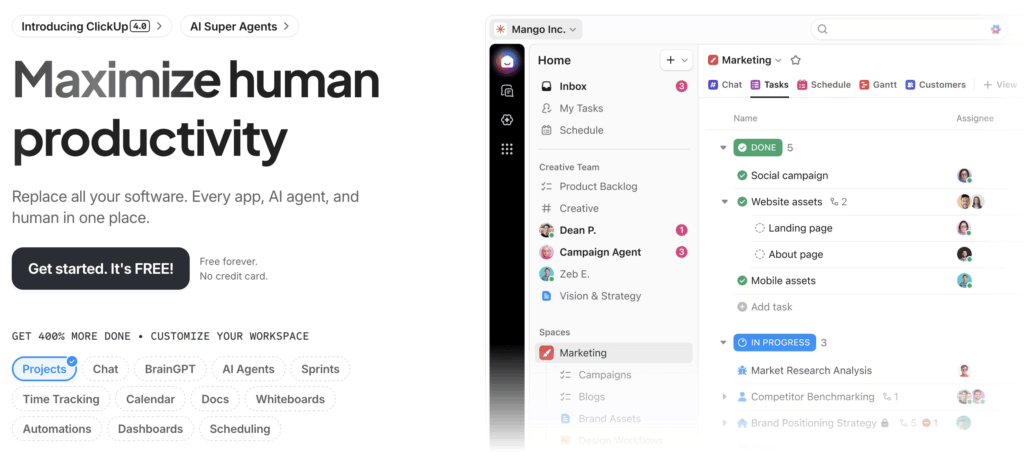
ClickUp positions itself alongside Asana as “the everything platform” — one workspace to host, structure, and optimize all workflows.
The core experience revolves around a vertical information hierarchy: Workspace →
Space → Folder → List → Task → Subtasks. Lists group related tasks, sit inside Folders or Spaces, and expand into nested subtasks when needed. Once populated, you can opt for another visualization view: board, calendar, timeline, Gantt, workload, or even a mind map.
Beyond task management, ClickUp layers in communication tools. There’s an AI-powered chat interface, embedded video clips, and an inbox reminiscent of Asana’s notification center. The product also invests heavily in AI and automation. Proprietary models and pre-trained agents assist with drafting tasks, summarizing meetings, pulling up information, taking notes, and even generating images. Access to foundational models like GPT and Claude expands that capability further, though it requires a separate subscription.
Knowledge management sits inside the same ecosystem. Docs, wikis, and whiteboards coexist with resource scheduling and time tracking. Time can be logged directly in the app and then used inside custom dashboards. For example, teams can plot time data on bar or pie charts to compare effort across departments or track utilization rates over time.
If the number of features starts to feel overwhelming, it slightly is. ClickUp has a lot under the hood, and sometimes this is too much for small teams or those who aren’t ready to spend time and money on proper onboarding and platform customization.
Key features
- Hierarchical task management system with additional views for visualizing different workflows
- Tailored use-case templates and workflows to manage different business functions.
- Custom fields and workflow statuses to capture project-specific data
- Built-in chat, comments, team channels, video clips, and mentions
- Depending on the plan, access to no-code automations, proprietary AI tools, and pre-trained AI agents
Supported platforms: Web, Windows, macOS, Android, iOS
Pros
- Users love how ClickUp centralizes work management in one place to streamline day-to-day operational control.
- Built-in team communication and collaboration tools take “the clutter and chaos out of projects” and reduce dependence on third-party apps like Slack or Microsoft Teams.
- Technical leads like how it adapts to “Agile and Waterfall workflows with ease” and effectively caters to each team’s different needs.
Cons
- While the app has a user-friendly interface, the sheer volume of available customizations and adjustments makes the learning curve really noticeable, as per adopters.
- Many users were upset with the sudden pricing shifts and lack of transparency around these decisions.
- Frequent lagging and slow page load times for larger workspaces are another recurring theme among frustrated users.
Pricing plans
- Free trial available
- Free forever plan for unlimited users
- 3 paid plans: Unlimited, Business, and Enterprise
- Paid pricing starts at $7/user/mo
8. Wrike
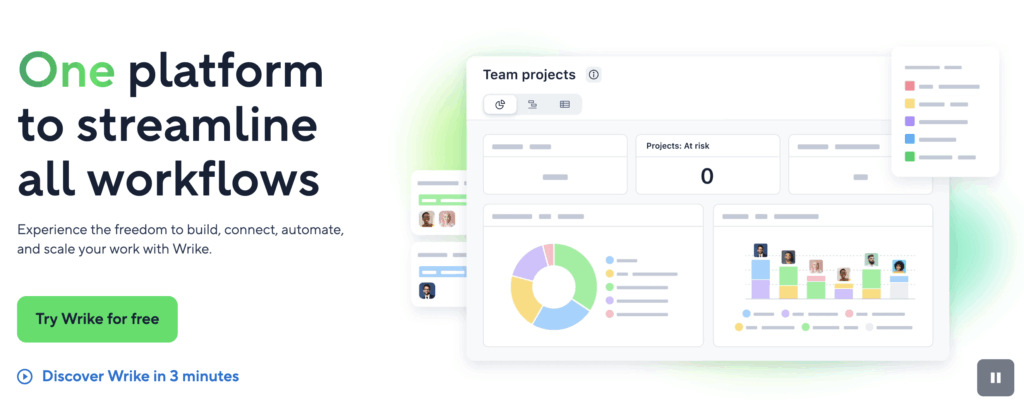
Wrike sits in the same enterprise work management category as Asana and ClickUp, with a stronger focus on process automation.
Custom workflows, intake standardization, creative proofing, and cross-functional project management are the core features that many larger organizations appreciate about Wrike. You can configure tasks to mirror your team’s exact processes or build a library of custom item types, and define your own terminology, icons, and fields.
Dynamic request forms are another great feature you can configure to streamline work intake and triage. Paid plans also give access to workflow automation that handles reminders, status transitions, and structural updates.
Like Teamwork, Wrike leans into financial oversight. You can track billable time, manage budgets, assign different team rates, generate timesheet reports, and sync with accounting platforms to produce invoices. But all of this functionality sits behind higher-tier plans, unlike Toggl.
Wrike’s enterprise positioning extends to security and administration. Account-level enforcement of two-step verification is available, and documentation emphasizes centralized control. This contrasts with concerns occasionally raised around Teamwork’s device-level verification policies, particularly in environments where compliance requirements carry weight.
If your priority is aligning multiple departments, standardizing intake, and layering automation across the business, Wrike’s configurability can feel appealing.
Key features
- Flexible task management with folders, projects, tasks, and subtasks
- Multiple project views, including board, table, calendar, and Gantt charts
- Dynamic request forms and intake automation to standardize work requests
- Fully customizable workflows and item types to match business processes
- Proofing and approval workflows for assets and review cycles
- Resource and workload views to assess team capacity and allocations
Supported platforms: Web, Windows, macOS, Android, iOS
Pros
- Almost unmatched flexibility in terms of customization scenarios. Users appreciate how the platform supports cross-functional collaboration.
- AI-powered collaboration features and agentic-based automation also attract lots of positive sentiment.
- Enterprise users also praise high product responsiveness and reliability, even handling thousands of tasks at once.
Cons
- Steeper learning curve, especially when you start setting up complex automations, custom fields, and advanced workflows.
- Due to the number of features, the interface appears cluttered to some users, making navigation more challenging.
- Some users don’t feel they have everything they need, despite recent product acquisitions and feature set expansions.
Pricing plans
- Free trial available
- Free plan with limited access to some features
- Four paid plans: Team, Business, Pinnacle, Apex
- Paid pricing starts at $10/user/mo
9. monday work management
monday work management is a customizable work and project management platform that sits on top of the monday.com Work OS. The product UX centers on highly visual boards, flexible views, and fast workflow building for cross-functional teams. Compared to Teamwork, it leans more toward internal workflow orchestration than client service delivery.
The core interaction model is the board. Status labels, owners, and due dates sit in plain sight, making it easy to grasp the project state at a glance. Timeline and Gantt-style views, along with workload widgets, extend that visual layer. For marketing, operations, or sales enablement teams that don’t really use formal PM frameworks, this “board as UI” view
lowers cognitive load.
Customization is another headline feature. You can set up multiple boards in a beat, define their own columns and fields, and layer in automations for scheduling, duplicating items, or assigning ownership. The automation engine supports standardization at scale, although heavier users sometimes bump into limits around conditional logic and action quotas.
The difference with Teamwork becomes more apparent when it comes to commercial tooling. monday work management supports time tracking, but billing and invoicing sit primarily inside monday CRM, a separate product.
Key features
- Highly visual boards with customizable fields (status, owners, dates, etc.)
- Multiple views, including timeline/Gantt, Kanban, table, and dashboard widgets
- Workflow customization and templates to adapt boards to your use cases
- Collaboration tools, including comments, updates in context, file attachments, and more
- WorkForms for structured data intake that feeds directly into boards
- Resource and workload visibility through widgets and centralized views for capacity planning
Supported platforms: Web, Windows, macOS, Android, iOS
Pros
- Many users praise monday work management for its “clean, intuitive, and easy to set up” views that ease the adoption curve.
- Others appreciate how it empowers collaboration in “the most natural way for the team rather than forcing them into a prescriptive format that may be clunky.”
- The workdoc feature also gets glowing reviews for aiding with knowledge management and process standardization.
Cons
- Some users dislike that “fundamental” features like time tracking are gated and that the app sometimes sneaks in “premium” data types in templates.
- While the platform has recurring tasks, the due dates don’t move automatically according to the new schedule.
- Only the highest premium plans offer unlimited guest access. The Standard plan bills four guests as one seat.
Pricing plans
- Free trial available
- Free plan with two seats
- Three paid plans: Standard, Pro, Enterprise
- Paid pricing starts at $12/seat/mo
Try Toggl as your alternative to Teamwork
Few teams ditch a project management tool without reason. Most walk away when cost scaling starts to sting, feature sprawl gets in the way of work, and reporting feels harder than it should.
The comparison above highlights a split in the market. Some PM platforms double down on configurability and enterprise workflow orchestration. Others strip work management back to clarity and execution discipline. The deciding factor isn’t usually the feature count, but how closely the tool matches your ways of working.
If Teamwork no longer feels like a fit for you, Toggl is a great alternative for combining time tracking with project planning to provide real-time, granular visibility into everyone’s workloads and a data-driven base for decision making.
Scrap the guesswork and start planning your work about actual availability, based on your teams’ workplace, PTO, and blocked hours. The reward: no more confusion about priorities or double-bookings that cause last-minute resource chaos.
With Toggl, you always have a clear view into your team’s time, tasks, and capacity for more work. Sign up for a free account to test it out.
Frequently asked questions (FAQs) about Teamwork alternatives
What is the closest alternative to Teamwork?
The two closest alternatives to Teamwork are ClickUp and Asana. Toggl is another good alternative for smaller teams, seeking a lean and affordable project management experience. For enterprises, Wrike is a popular alternative to Teamwork, with strong resource planning functionality, advanced reporting, and scalable process automation.
Why do companies switch away from Teamwork?
Most companies switch away from Teamwork because it lacks critical features they need, like direct email integration, oversimplified Kanban boards, and built-in automation. Some users also feel frustrated that advanced reporting, client portal access, and resource management tools are locked on the highest plan tiers, and plan updates sometimes come with opaque costs.
Are there free alternatives to Teamwork?
Yes, there are free alternatives to Teamwork, including:
- Toggl. The free plan includes all the core product features — task management, multiple project views, time tracking — and supports up to five users.
- ClickUp is fully free for up to five spaces, with unlimited tasks, sprints, dependencies, and some resource scheduling features.
- Trello has a free plan for up to 10 users. It’s a good alternative to teams that want to switch to Kanban-based project management and enjoy more guest viewers.
Which Teamwork alternative is best for agencies or client work?
Some of the best like-for-like Teamwork alternatives for agencies and client work are ClickUp and Toggl. Both combine seamless task management with time tracking and tools for client‑facing collaboration.
Other alternatives to Teamwork include Wrike, Asana, Scoro, and Bonsai, depending on how much emphasis you put on features like automation, budgeting, invoicing, and CRM.
How hard is it to migrate from Teamwork to another tool?
Migrating from Teamwork to another tool can be demanding. But the right tool, the payoff — cleaner workflows, better visibility, and pricing that actually scales with you — makes the effort worthwhile.
To get to that point, you’ll need to first export all stored data as a CSV file or through integrations like Import2, or use a REST API. Next, you’ll need to clean up and organize your data in the new tool. That will likely include resetting recurring tasks, deadlines, dependencies, and other configurations. Be aware that you may also lose some attachments and time-tracking history. Smaller agencies usually need 1-3 days of setup and testing when migrating out of Teamwork to another tool.

Elena is a senior content strategist and writer specializing in technology, finance, and people management. With over a decade of experience, she has helped shape the narratives of industry leaders like Xendit, UXCam, and Intellias. Her bylines appear in Tech.Co, The Next Web, and The Huffington Post, while her ghostwritten thought leadership pieces have been featured in Forbes, Smashing Magazine, and VentureBeat. As the lead writer behind HLB Global’s Annual Business Leader Survey, she translates complex data and economic trends into actionable insights for executives in 150+ countries. Armed with a Master’s in Political Science, Elena blends analytical depth with sharp storytelling to create content that matters.


